Animals are handled daily on nearly half of
New York farms. In the Northeast, animal
handling mishaps rank second in reported
farm accidents. Every year at least one New
York farmer dies as a direct result of a
confrontation with a farm animal. An
understanding of animal behavior is essential
to pre- venting these accidents. Handlers must
be aware of how animals react to different
situations and know how to avoid or control
potentially dangerous predicaments.
Animal Characteristics
Smell, Hearing, Sight
Most livestock rely heavily on their senses of
smell, hearing, and to a lesser extent, sight.
The sense of smell is particularly important to
animals, and they will often react to odors
that people cannot detect. Cattle may be lured
by the smell of freshly mown hay, or a bull
may become aggressive if he detects a cow in
heat. Odors can trigger defensive reactions in
livestock, especially females with newborns.
Animals have extremely sensitive hearing.
They hear high-pitched sounds better than
humans and loud high- pitched noises often
frighten or excite them.
Cattle and sheep see objects in black and
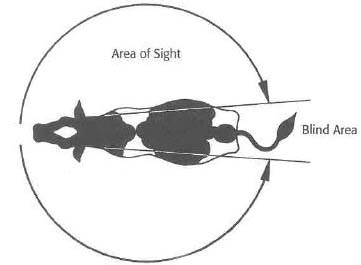
white. Cattle have a panoramic field of vision,
which means they can see everything around
them except what is directly behind their
hindquarters. If approached from the rear, they
may be startled. Cattle have limited depth
perception and judge distance poorly.
Shadows may appear as holes, so they
sometimes balk at sharp contrasts in light.
Chute and alley walls should have flat
surfaces to minimize this reaction.
Diffuse lighting, which reduces
bright spots and shadows, helps
quiet animals. Livestock
move more
comfortably from dark
to light areas than the
reverse.
Behavior
People who regularly work with livestock
realize that each animal has its own
personality, however, certain animal
behaviors are predictable.
| Disease | Route of Transmission | Symptoms in Humans | Safeguards (Prevention) |
| Rabies | Transmitted by the saliva of infected animal through a bite, open wound, or sore. | This disease attacks the central nervous system. Symptoms include headache, irritability, fever, and excess salivation. As the disease progresses, other symptoms include spastic skeletal muscle contractions, convulsions, respiratory failure, and eventual death. | Refrain from handling small animals around the form, unless they are immunized. Wear gloves when feeding calves and when treating sick animals. |
| Brucellosis (Bang’s Disease) | Transmitted to humans in raw (unprocessed) milk, aborted fetuses or afterbirth from an infected animal, or from an infected carcass at time of slaughter. | The acute stage mimics influenza (high fever, chills, body aches), fatigue, night sweats, Headaches and occasionally diarrhea, weight loss, and irritability. | Good sanitation reduces the chance that the herd will be infected. |
| Q Fever | Inhaled from surroundings contaminated by animals that excrete the organism with uterine discharges and placentas. | Acute fever, headache, and weakness following an incubation period of 2-4 weeks. Productive cough (phlegm) and chest pain is common. | High risk livestock should be vaccinated. Good sanitation reduces the possibility of contracting this disease. |
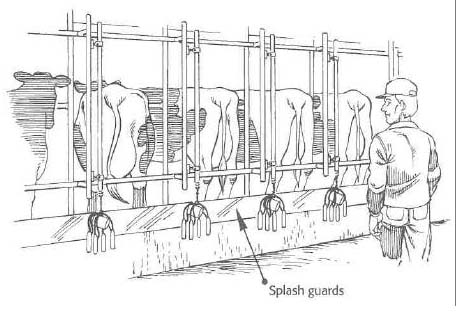
| Leptospirosis | Transmitted to humans from contact with animal urine. | Chills, fever, body aches, nausea, vomiting, jaundice, skin rash, stiff neck, and muscle tenderness commonly found in lower legs, thighs, and lumbar areas. | Milking parlors should have splash guards in place to prevent contact. |
| Ringworm | Transmitted by direct contact with infected animal. | Ringworm is a fungal infection. It is characterized by raised, reddened areas that form small, round circles. | Proper sanitation after handling helps to prevent this disease. |
| Salmonellosis | Transmitted through contaminated feed or water from wild or domestic animals and poultry. | Severe gastrointestinal distress (nausea, vomiting, diarrhea, and abdominal pain) and fever. | Good sanitation and proper storage, handling, and cooking of animal-derived foods will reduce the risk of poisoning. |
| Trichinosis | Transmitted by consumption of uncooked or partially cooked pork. | This parasite can be painful and sometimes fatal to humans. Gastrointestinal disorder (nausea, vomiting, diarrhea, and abdominal pain) are early symptoms. As the disease progresses, it migrates into the muscle tissue and causes muscular weakness. | Always thoroughly cook pork to prevent this disease. |
| Lyme Disease | Transmission normally occurs through the bite of a deer tick. | Symptoms usually develop within 2-30 days of the tick bite. Asmall red bump may appear near the bite and enlarge into a spreading red ring. This is followed by general ness including fever, chills, headache, and backache. Palpitations, di77iness, and shortness of breath may also occur. Untreated cases may advance into rheumatoid, arthritic, or cardiac problems. | Exposed skin should be protected. Pants should be tucked into socks. Examine skin carefully after possible exposure. Antibiotics can be successful during the early stages of this disease. |
 Badly designed facilities or those in poor
repair are responsible for many injuries to
humans and animals. Proper
planning should precede construction or
renovation of livestock facilities. Key
considerations include ventilation,
traction, proper access for animals and
people, and escape routes for handlers.
Badly designed facilities or those in poor
repair are responsible for many injuries to
humans and animals. Proper
planning should precede construction or
renovation of livestock facilities. Key
considerations include ventilation,
traction, proper access for animals and
people, and escape routes for handlers.
Disclaimer and Reproduction Information: Information in NASD does not represent NIOSH policy. Information included in NASD appears by permission of the author and/or copyright holder. More